Author: tiphane

The Elevator in my building

The elevator in my building is relatively simple to operate… But judging from the occasional bell ring I can hear from my apartment, people get confused with the bottom row of the panel. The buttons for the five floors are close enough to their legend and distant enough from each other to make it a clear choice. There’s even Braille although I would have to check with a blind person to know if it’s working for them. Fortunately they thought of putting a star next to the number 1. Too often I see, especially in buildings with a basement, an assortment of letters the user has to guess… Sometimes there’s LL or B for the basement, and G for Ground Floor which could just be 1, because this one user (me) keeps thinking it’s for Garage while LL suggests Lobby… The problem with the bottom row is that it contains both a frequently used pair of buttons to request door opening and closing, as well as two buttons that trigger the alarm. It isn’t clear …


DYI User-Centered Design and Usability

Too late in my working life to have any effect on my work, I took a class from Richard I Anderson, a survey of user-centered design and usability research, which at the time were relatively new. Designers were relying on their own instincts or copying from others who dominated the market, and more often than not Computer Science curriculum never included the possibility that we were making our users’ lives more difficult by imposing our views on them of how they should interact with our creations. To make matters worse, our employers insulated departments from each other, and conflicts would arise about “who owns the user.” Was it the industrial designer, hired by Marketeers to entice consumers to buy the product, or the Engineer who applied their techniques to the best of their knowledge? I was neither of them, relying mostly on intuition (not really great either), and never being able to impose my views (I came to specialize in fixing other people’s software because I could take it home and rewrite it with clarity, …

Memories of a Waltz

A fine dancer, she remembered thinking, leading her but not directing like so many awkward men did. She knew where the music would take them next, and there she went. Their feet glided in unison, and never seemed to suffer from an inadvertent push or pull by the other…

My Father’s Camera: an Experiment

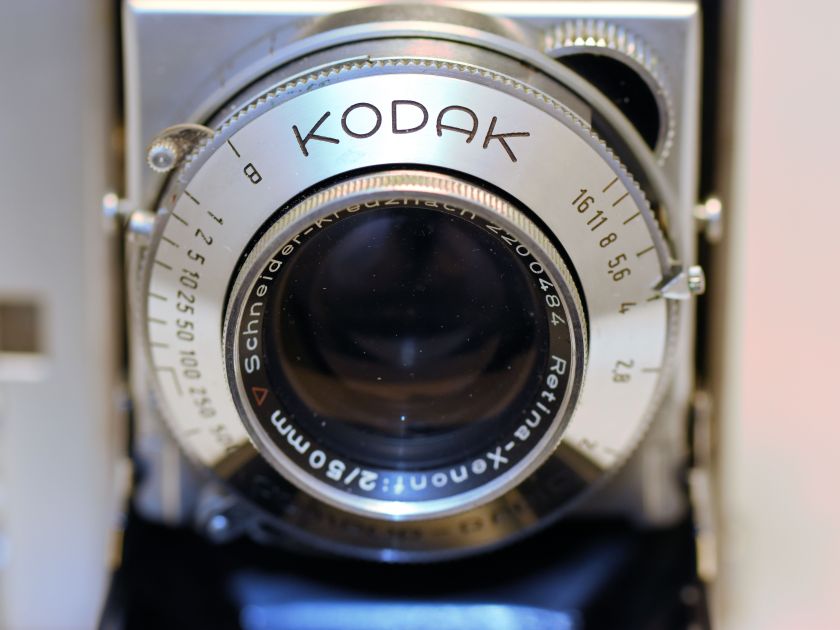
I recently revived my father’s camera, a Kodak Retina II from the 1940’s, as I described in this earlier post. I am fortunate enough to have a local photo shop, called Looking Glass, within biking distance, where I could buy a roll of film. There were very few options, and I was surprised that the Kodak brand still existed. I also saw from the shop’s web site that some films were subject to quotas! I went home with Kodak Ultramax 400 film of 36 exposures. The 400 ASA number felt very high as I remembered using 100 ASA negative films and Kodachrome 64 and 25 for slides. 400 meant I could take photos in lower light conditions, faster speeds, and/or smaller apertures. It was appropriate that I would use Kodak film in a Kodak camera… I found an image of the original user’s manual (from retinarescue.com) which suggested that of course. The user’s manual shows distance settings in Feet, whereas my father’s model shows them in Meters, a sign to me it had been manufactured in Germany for the European market (and may …

the hypoeste and the camera

I started a project to use my father’s camera, a Kodak Retina II, as a kind of post-post-modernist thing to show it how we now see the photos it took 40-70 years ago. Here’s a photo that may have been one of its first rolls, in the summer of 1949 when he worked on mining exploration in the far north of Quebec: And I already posted here some of the slides we used to see on Friday nights, helping us with the stories of our family.  First I wanted to capture the object itself, the camera: from different points of view: it’s really work in progress… and the sun was setting in my window, where sits this hypoeste plant growing old… And the Kodak project will go on… Watch for progress in future posts!

50 ans d’informatique: #4 les HEC leader? Mais aussi vous!

Je viens d’apprendre que les HEC ont un laboratoire “spécialisé dans l’évaluation de l’expérience utilisateur (UX)” et même qu’ils offrent un programme de maîtrise… C’est très bien, je pense, mais cela ne veut pas dire que vous devriez continuer à faire des applications (de quelque genre que ce soit) sans aller voir ses usagers… Sinon on risque de faire des compartiments de compétence. J’espère en fait que les différentes organisations qui vous emploient favorisent le travail multi-disciplinaire et que donc vous pourriez avoir une équipe qui inclut des spécialistes en UX et qui vont vous impliquer dans la tâche de s’engager à développer votre produit pour les usagers. Sinon on se retrouve dans les vases clos d’autrefois, avec des ressentiments envers les personnes qui parlent plus fort, etc. Mais bon, est-ce que votre entreprise aura de tels spécialistes? Est-ce qu’on se trouve dans la situation que les budgets ne le permettraient pas, ou bien vous avez une idée et vous ne pouvez pas engager quelqu’un? Ce que je veux dire dans tout ça c’est que …